
By Lewis Finney
Not long ago, you’d be forgiven for thinking of virtual reality as being confined to science fiction or a plaything for those with large bank accounts, but these days having the required hardware at home isn’t exactly uncommon.
In 2014, Facebook bought the VR company Oculus in a deal worth $3 billion. This kickstarted a trend of the biggest, most recognisable technology companies on the planet all scrambling to get involved with the medium.
Virtual reality is no longer a distant pipedream of developers and gadget fanatics. It’s here and it’s aiming to change the way your media is produced and consumed.
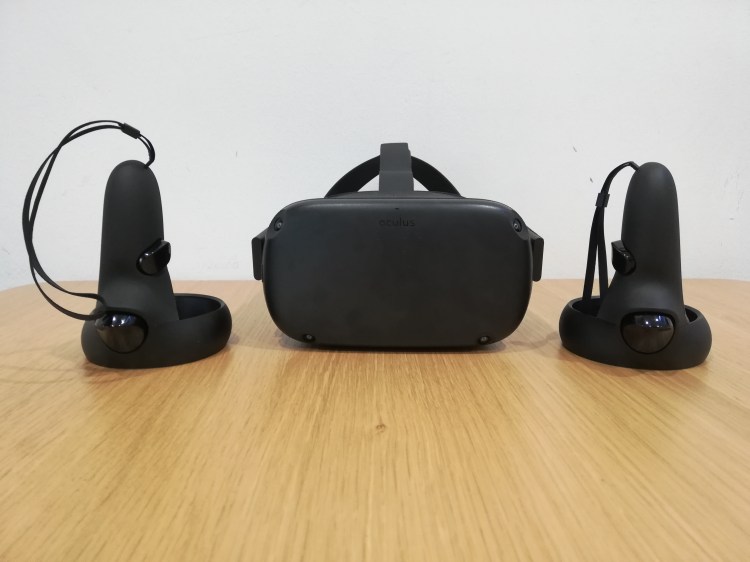
In the early days of VR, as with any new technological phenomenon, the necessary equipment wasn’t cheap to procure but the contemporary versions are relatively inexpensive. Oculus Quest, the latest all-in-one VR headset and games console costs around £400 and a 360-degree camera can be bought for less that £100. It’s not exactly small change, but for less than £500 you could become both a producer and consumer of immersive media, and it’s only going to get cheaper.
So, is it realistic expect that VR headsets will replace the rectangle screens there we’re used to interacting with media via? And what are the pros and cons of this immersive medium?
Alasdair Swenson is a research associate at the Creative AR & VR Hub at Manchester Metropolitan University. He believes that, once the remaining kinks have been ironed out, virtual reality will become part of everyday life.
Swenson said: “The technology is improving so rapidly, it’ll become a much more natural experience. VR has been clunky for a while now – you’ve got to plug it in, you’ve got to calibrate it, you’ve got to have the right technology already or invest quite a lot financially to get that. There are also problems in public environments and using these technologies, it doesn’t necessarily work very well but it will soon.”
Advancements in other technologies might aid VR in becoming integrated into everyday life. Spatial computing is a term that’s used to describe wearable devices, such as smart watches or Fitbits, and it’s been rumoured for the last decade or so that Apple are attempting to create glasses with immersive capabilities.
Swenson believes that this rumour indicates exciting times are ahead for VR: “I think they will do both [VR and AR]. There will be clear lenses in them, and you’ll be able to see this layer of information overlaid on our view of the world, but then also it could go full VR mode as well, fully enclosing you in an experience.”
The accessibility of having a headset at home or wearing some spectacles with the potential to display VR media means that this platform could soon allow most people to experience virtual reality’s true potential.
Saleem Khan is the founder of immersive and spatial consultancy, JOVRNALISM. His company helps news organisations understand the power of VR and assists them in implement strategies to utilise the medium.
Khan also thinks exciting times are ahead: “I assume what [news organisations] are waiting for is one of the big technology players, or several of them, to come out with their more lightweight, slimmer, sleeker augmented reality or virtual reality headsets. I’m assuming that the big bet is on Apple which was originally expected to release a set of augmented reality glasses in 2020, but now the current industry discussion is that that won’t occur until maybe 2022 or 2023. But it is coming. There is virtually no doubt, no pun intended, that within a decade it’ll be a dominant form of interaction, just like the smart phone is now,” Khan said.
The main benefit that VR brings to journalism is the ability to create empathy in a much more natural and powerful way. Reading about a child’s plight in a warzone creates a certain level of empathy but if you could be transported to that warzone, walk around it and look into the eyes of that child while they speak directly to you about what they’re going through, the emotional connection would be considerably amplified.
“Engaging with an audience from an emotional level I think VR has a lot to offer and I think that’s the strength of it within a journalism context.
“With VR we have the potential to embody that person or be an individual within an environment and make our own narratives or make our own deductions from being immersed in a situation,” Swenson said.
VR also could also offer the user the chance to transport to an event that they would love to be at, but otherwise would have been unable to attend.
Khan said: “If you think about what news organisations have been trying to achieve, pretty much as long as they’ve been around, they’ve been trying to bring people to scene of what’s going on so that they get a better understanding of the context to whatever the story is.
“Think about the inauguration of Barack Obama. That’s something that a lot of people wanted to be at and experience. Well, you can place someone there.”

(DoD photo by Senior Master Sgt. Thomas Meneguin, U.S. Air Force/Released)
Users of the most up-to-date technology are usually perceived to be young and savvy and the newest trends tend to pass by those who are put off by assuming they’re not modern enough to work them out. The beauty of VR, in this respect, is that it’s operated in a way that everyone can understand.
Swenson said: “You pick it up and use it in a natural way, it doesn’t take a lot of learning to use. You can use natural interfaces such as gesture recognition, so we can just use our hands. We all know how to use our hands, we all know how to look around and spot something, we all know how to use our ears. It’s becoming a lot more natural to consume media in that way.”
 Journo Tech